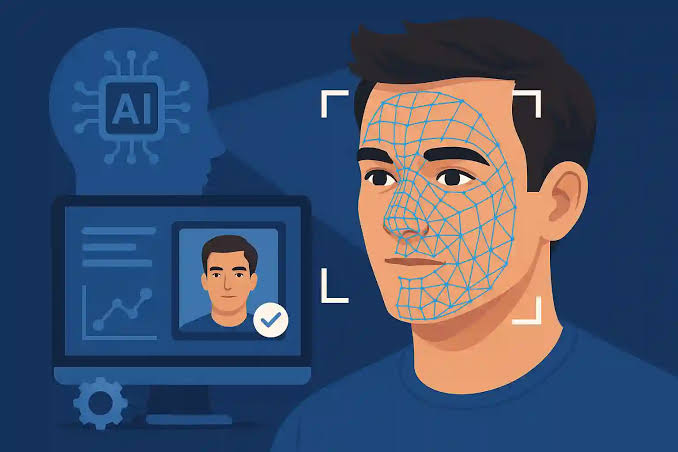
Facial recognition technology is changing how governments identify people, how police investigate crimes, and how businesses verify customers. From airport check-in systems to live surveillance cameras, the technology is becoming part of everyday life. But while some countries are introducing strict restrictions, others are rapidly expanding its use.
The legal picture is complicated. There is no single global rule banning facial recognition. Instead, countries regulate different applications, including police surveillance, biometric databases, workplace monitoring, border security and commercial identity verification.
How Do Facial Recognition Laws Work?
Facial recognition systems analyze facial characteristics to verify or identify an individual. Depending on the system, software may compare a face with a photograph stored on a device, check a person’s identity against a database, or scan a crowd for individuals on a watchlist.
Regulators often distinguish between two important applications:
Facial verification
A system checks whether a person matches an identity they claim to have. Examples include unlocking a smartphone, verifying a bank customer or boarding an airplane.
Facial identification
A system compares a face against a database to determine who the person might be. Police surveillance cameras and large-scale biometric searches are common examples.
This distinction matters because a law may allow voluntary identity verification while imposing strict limits on identifying people in public spaces without their knowledge.
Legislation commonly addresses several issues:
- Consent: Whether individuals must agree before their facial data is collected.
- Purpose limitation: Whether collected data can be reused for unrelated purposes.
- Public surveillance: Whether authorities can scan people in streets, parks or transport hubs.
- Data retention: How long biometric information can be stored.
- Accuracy and bias: Whether systems produce unequal error rates across demographic groups.
- Transparency: Whether people must be informed that facial recognition is operating.
European Union: Some of the World’s Strictest Restrictions
The European Union has developed one of the most comprehensive regulatory frameworks for artificial intelligence and biometric identification. Its approach combines the General Data Protection Regulation (GDPR) with the EU Artificial Intelligence Act.
Does the EU ban facial recognition?
No. The EU does not impose a blanket ban on all facial recognition. However, the AI Act prohibits certain particularly intrusive applications, including the use of real-time remote biometric identification in publicly accessible spaces by law enforcement, subject to narrowly defined exceptions.
Those exceptions include specific searches for victims of abduction, trafficking or exploitation, certain serious criminal investigations, and responding to an imminent threat to life or a terrorist attack. The use must meet legal conditions, including necessity, proportionality and prior authorization by a judicial or independent authority.
The AI Act also prohibits certain practices involving biometric data, such as creating or expanding facial recognition databases through untargeted scraping of facial images from the internet or CCTV footage.
What does the GDPR add?
The GDPR treats biometric data used for uniquely identifying a person as a special category of personal data. Processing is generally prohibited unless a specific legal exception applies. Organizations may need a valid legal basis, an applicable special-category condition, clear information notices and appropriate safeguards.
This means a company cannot automatically assume that installing facial recognition cameras is lawful simply because the technology is commercially available.
The EU’s approach is also evolving. A September 2026 report by the European Union Agency for Fundamental Rights examined the human rights implications of remote biometric identification and called for clear legal bases, independent oversight and safeguards against identifying people at peaceful assemblies.
United States: A Patchwork of State and City Laws
The United States does not have one comprehensive federal law that uniformly regulates every use of facial recognition. Instead, restrictions vary significantly between states, cities and sectors.
Some local governments have adopted strong limits on police use, while other jurisdictions allow law enforcement agencies to use the technology under policies, warrants, reporting requirements or other safeguards.
Cities with restrictions
Several US cities have adopted restrictions or bans on government use of facial recognition. Examples that have been associated with significant local limitations include:
- Portland, Oregon: Adopted broad restrictions on the use of facial recognition technology by city government and private entities in places of public accommodation, subject to the law’s specific scope and exceptions.
- Boston, Massachusetts: Restricted municipal use of facial recognition technology.
- San Francisco, California: Adopted limits on city departments’ acquisition and use of facial recognition, with exceptions and subsequent policy developments to consider.
- Oakland, California: Adopted restrictions on city government use.
Local laws can change, and a municipal restriction should not be confused with a statewide or nationwide ban.
Illinois and biometric privacy
Illinois is particularly important because of its Biometric Information Privacy Act (BIPA). The law regulates the collection, use, storage and disclosure of biometric identifiers and biometric information by private entities.
Depending on the circumstances, companies may need to provide written notice, obtain informed written consent, publish retention policies and meet restrictions on disclosure and commercial use. BIPA has also become significant because it allows individuals to bring certain private lawsuits.
Other state-level rules
States including Washington and Colorado have adopted requirements affecting government use of facial recognition and other biometric systems. Some rules require testing, documentation, human review or additional authorization for particular applications.
The result is a fragmented legal environment. A business operating in multiple states may need to comply with different biometric privacy requirements, even when it uses the same technology.
China: Widespread Deployment With New Rules for Private Use
China is one of the most prominent examples of large-scale facial recognition deployment. The technology is used in areas such as public security, transportation, financial services, residential access systems and identity verification.
However, it would be inaccurate to describe China as having no facial recognition regulation. The country has introduced rules governing how organizations collect and process facial information.
Facial recognition measures effective since June 2025
China’s Measures for the Security Management of Facial Recognition Technology Applications took effect on June 1, 2025. They regulate the use of facial recognition technology to process facial information for identifying individuals.
Among other requirements, the measures establish that:
- Facial recognition should generally not be the only identity verification option when a reasonable alternative can achieve the same purpose.
- Organizations must follow applicable requirements for processing facial information and protecting personal data.
- Facial recognition equipment in public places may only be installed when necessary for maintaining public security.
- Collection areas should be properly defined and accompanied by visible warning signs.
- Installing facial recognition equipment in sensitive private areas, such as hotel rooms, public bathrooms and changing rooms, is prohibited.
These rules do not amount to a general ban on government surveillance. They establish controls on particular applications, especially those involving organizations and identity verification.
China’s Personal Information Protection Law (PIPL), which took effect in 2021, also provides a broader legal framework for personal information, including sensitive personal information such as biometric data.
India and Other Asian Countries
India: Expansion of government facial recognition systems
India has invested in facial recognition technology for policing, public security and identity-related applications. Government agencies and police forces have explored or deployed systems that can compare images against databases and assist with identifying individuals.
India’s Digital Personal Data Protection Act, 2023, establishes a general framework for digital personal data. However, it does not create a complete facial recognition-specific regime equivalent to the EU AI Act. Its interaction with biometric systems depends on the circumstances, applicable exemptions and other legal requirements.
The debate in India focuses on the balance between public safety, privacy, transparency, oversight and the risks of large-scale identification without meaningful individual control.
Singapore: A technology-friendly approach
Singapore has adopted biometric technologies in areas such as immigration, airport processing and digital identity services. Its regulatory approach emphasizes data protection, security and responsible deployment rather than a general prohibition.
The Personal Data Protection Act (PDPA) governs many private-sector uses of personal data. Organizations must consider notification, purpose limitation, protection and retention requirements when handling personal information.
Japan: Use under general privacy and data protection rules
Japan does not have a comprehensive national ban on facial recognition. Its Act on the Protection of Personal Information (APPI) provides the main framework for handling personal data, including information that can identify individuals.
Facial recognition may be used in commercial and security settings, but organizations must consider the applicable rules on personal information, transparency and proper handling.
South Korea: Biometric data and privacy protections
South Korea has a mature personal information protection framework under its Personal Information Protection Act. Biometric information used for identification can trigger enhanced legal requirements. Facial recognition deployments therefore need to be assessed in light of the purpose, data processing and applicable safeguards.
Latin America: Adoption Is Growing, but Rules Differ
Latin American governments are increasingly interested in facial recognition for policing, public transport, stadium security, border control and identity verification. However, the region does not have a single shared legal framework comparable to the EU’s AI Act.
Brazil
Brazil’s General Data Protection Law, known as the LGPD, classifies biometric data linked to an individual as sensitive personal data. This creates additional obligations for organizations processing facial information.
The LGPD does not automatically prohibit facial recognition. Instead, the law establishes conditions for processing sensitive data, including specific legal bases, security measures and accountability requirements.
Facial recognition has nevertheless expanded in Brazilian public security projects, transport systems and commercial environments. This has generated debate about proportionality, surveillance, false matches and the risk of discriminatory outcomes.
Mexico
Mexico’s privacy framework includes laws governing personal data held by private parties and public institutions. These rules can apply to facial information when it identifies or makes an individual identifiable.
The country has seen the use of biometric technologies in security and identity-related projects, but the legal analysis depends on the responsible authority, the purpose of processing and the applicable privacy obligations.
Argentina
Argentina’s Personal Data Protection Law (Law 25,326) provides a general framework for personal data processing. Facial recognition systems may raise questions about consent, proportionality, data security and the legality of creating or consulting biometric databases.
The deployment of facial recognition by public authorities has also been subject to legal and public scrutiny, particularly when surveillance systems operate in public spaces.
Peru
Peru’s personal data protection framework is based on Law No. 29733, the Personal Data Protection Law, and its implementing regulations. Biometric information can receive special protection when it is used to identify an individual.
This framework is relevant to companies and public institutions considering facial recognition for access control, identity verification, security or customer services. Organizations should assess the legal basis for processing, provide appropriate information, protect the data and comply with applicable requirements.
Peru does not have a general nationwide prohibition on all facial recognition applications. The legality of a specific deployment depends on the purpose, the entity using the system, the data involved and the applicable legal safeguards.
Where Is Facial Recognition Expanding?
Despite growing privacy concerns, facial recognition continues to spread across several industries. Its expansion is not limited to police surveillance. In many cases, governments and companies promote the technology as a way to make identity checks faster or improve security.
Airports and border control
Airports use biometric systems to support identity verification, immigration processing and boarding procedures. Some programs allow travelers to move through checkpoints with fewer document checks.
Police investigations
Law enforcement agencies use facial matching to compare images from cameras or other sources with databases of known individuals or suspects.
Financial services
Banks and payment providers may use facial verification to confirm customer identity, support account onboarding and reduce certain types of fraud.
Shopping centers and stores
Some retailers explore facial recognition for security, access control and customer analytics. These applications can raise significant consent and privacy questions.
Employee access and attendance
Employers may use biometric systems for building access or attendance tracking. Workplace power imbalances can make meaningful consent particularly difficult.
Online identity verification
Digital platforms use facial checks to compare a live image with an identity document or to confirm that a real person is completing a transaction.
The main regulatory challenge is determining when convenience and security justify collecting biometric information that cannot be changed as easily as a password.
Facial Recognition Laws Around the World: Comparison Table
The following table provides a high-level overview of the regulatory approach in selected jurisdictions. It is not a list of countries where every form of facial recognition is either legal or illegal.
| Country or region | Regulatory approach | What it means in practice |
|---|---|---|
| European Union | Strict restrictions | Real-time police identification in public spaces is prohibited except for narrow legal exceptions. GDPR rules also apply to biometric data. |
| United States | Fragmented regulation | Some cities and states restrict government use, while biometric privacy laws such as Illinois BIPA regulate private-sector practices. |
| United Kingdom | Regulated deployment | Police live facial recognition is used under legal and policy safeguards. Data protection and human rights rules remain relevant. |
| China | Broad deployment with specific controls | Facial recognition is widely used, while 2025 measures introduce additional safeguards for applications, particularly in the private sector. |
| India | Expanding use | Government facial recognition projects operate alongside a broader digital personal data protection framework. |
| Singapore | Technology-friendly regulation | Biometrics are used in travel and identity services, subject to applicable data protection requirements. |
| Japan | General privacy regulation | Facial recognition is not generally banned, but personal information rules apply to relevant processing. |
| South Korea | Privacy-focused framework | Biometric information is subject to personal information protection requirements. |
| Brazil | Regulated expansion | The LGPD classifies biometric data as sensitive personal data, while public and private deployments continue. |
| Mexico | General data protection rules | Privacy laws apply to identifiable personal information, including relevant biometric processing. |
| Argentina | General data protection rules | Personal data law applies, with additional scrutiny around public-sector surveillance and biometric databases. |
| Peru | General data protection rules | Law No. 29733 and its regulations provide the main framework for personal and biometric data processing. |
Note: This comparison is an educational summary, not a definitive legal opinion. National rules, local ordinances, court decisions and sector-specific requirements may change.
What Businesses Need to Know Before Using Facial Recognition
Companies considering biometric technology should not treat facial recognition as an ordinary software feature. A system that processes facial data can create legal, cybersecurity and reputational risks.
1. Identify the purpose
Determine whether the system is used for one-to-one verification, access control, surveillance, employee monitoring or customer analytics. Different purposes can trigger different legal requirements.
2. Establish a lawful basis
Identify the legal basis for processing biometric information in every jurisdiction where the system operates. Consent may be required in some circumstances, but it is not automatically the only possible legal basis.
3. Provide a meaningful alternative
Where possible, offer a non-biometric option such as a password, access card, identity document or manual verification. This is particularly important where individuals should not be forced to use facial recognition.
4. Limit data collection and retention
Collect only the information necessary for the stated purpose. Establish clear retention periods and delete biometric information when it is no longer needed or when the applicable legal requirements demand deletion.
5. Test accuracy and bias
Facial recognition systems can produce false matches and different error rates across demographic groups. Businesses should evaluate system performance in realistic conditions and establish human review procedures for consequential decisions.
6. Secure biometric information
Facial data should be protected through access controls, encryption, vendor assessments, security testing and incident response procedures. A biometric data breach can have long-term consequences because people cannot simply replace their faces in the way they can replace passwords.
7. Review vendors and third-party systems
Organizations should understand where data is stored, whether vendors reuse images to train algorithms, who can access the information and whether data is transferred internationally.
Facial Recognition Compliance Checklist
Use this quick checklist to review the basic questions an organization should answer before deploying a facial recognition system.
The Future of Facial Recognition Laws
Facial recognition regulation is likely to become more important as artificial intelligence improves the speed and scale of biometric identification. Systems that once required a controlled photograph can increasingly analyze video, work across large databases and identify individuals at a distance.
Several regulatory debates are likely to shape the next few years:
- Real-time mass surveillance: Governments will face growing pressure to justify when scanning crowds is necessary and proportionate.
- Biometric databases: Regulators may impose stricter limits on how images are collected, stored and reused.
- Public transparency: People may demand clearer notices when cameras use facial recognition in streets, stores and transport systems.
- Algorithmic discrimination: Testing and independent audits may become more important where facial matching affects access to services or law enforcement decisions.
- Cross-border data transfers: International companies will need to manage different privacy rules when biometric information moves between countries.
- Deepfakes and identity fraud: Better face-matching systems may be developed alongside new methods for detecting synthetic images and impersonation.
The central question is no longer simply whether facial recognition should be legal. Governments increasingly need to decide which uses are acceptable, who can authorize them, how long data can be retained and what remedies are available when the technology causes harm.
Frequently Asked Questions About Facial Recognition Laws
Is facial recognition illegal worldwide?
No. Facial recognition is legal in many countries, although its use may be restricted by privacy, biometric data, AI, consumer protection or law enforcement regulations. Some jurisdictions prohibit specific applications rather than the technology itself.
Which countries have banned facial recognition?
There is no simple list of countries with a complete nationwide ban on every facial recognition application. The European Union prohibits certain uses, including real-time remote biometric identification by law enforcement in publicly accessible spaces, subject to narrow exceptions. Some US cities and states also impose strong restrictions on government use.
Does the EU AI Act ban all facial recognition?
No. The EU AI Act prohibits certain practices and imposes strict conditions on others. Real-time remote biometric identification by law enforcement in publicly accessible spaces is generally prohibited, subject to specific exceptions. Other uses may be permitted under applicable AI and data protection laws.
Can police use facial recognition in the United States?
It depends on the jurisdiction and the circumstances. Some agencies can use facial recognition under state or local rules, while certain cities and states have adopted restrictions or prohibitions. There is no single nationwide rule that governs every police deployment.
Is facial recognition legal in China?
Yes, facial recognition is widely used in China. However, the country introduced measures effective June 1, 2025, that regulate facial recognition applications, including alternative identity verification options in many circumstances and restrictions on equipment in sensitive private spaces.
Can companies use facial recognition at work?
Sometimes, but workplace use can raise additional legal issues. Employers should assess the applicable biometric and employment laws, provide required information, establish a lawful basis, limit data retention and consider whether employees have a genuine alternative.
Is facial recognition legal in Peru?
Peru does not have a general ban covering every facial recognition application. The Personal Data Protection Law, Law No. 29733, and its regulations are relevant when organizations process personal and biometric information. The legality of a particular use depends on its purpose and the applicable requirements.
Why are governments restricting facial recognition?
Common concerns include mass surveillance, privacy violations, inaccurate matches, discrimination, misuse of biometric databases and the difficulty of changing biometric identifiers after a data breach.
Conclusion: Facial Recognition Is Expanding, but Regulation Is Catching Up
Facial recognition laws around the world reflect different approaches to privacy, security and technological innovation. The European Union has introduced some of the strongest restrictions on certain forms of biometric surveillance. The United States relies on a fragmented combination of state and local rules. China continues to deploy facial recognition widely while introducing controls for specific applications. Meanwhile, countries in Asia and Latin America are developing their own approaches through data protection laws and sector-specific policies.
For individuals, understanding these differences is important when using digital identity services, traveling internationally or interacting with organizations that collect biometric information. For businesses, the message is clear: facial recognition should be deployed only after careful legal, privacy and security assessments.
As the technology becomes more powerful, the debate will increasingly focus on transparency, accountability and the right of individuals to know when their faces are being scanned.
Sources and Further Reading
For readers who want to review the underlying legislation and regulatory guidance, the following resources are useful starting points:
- European Union – Artificial Intelligence Act (Regulation EU 2024/1689)
- European Union – General Data Protection Regulation (GDPR)
- Library of Congress – China’s Facial Recognition Measures
- UK Government – Live Facial Recognition Policy
- US Federal Trade Commission – Biometric Information
- Illinois – Biometric Information Privacy Act
- Brazil – National Data Protection Authority (ANPD)
- Peru – National Authority for Personal Data Protection
- Office of the Privacy Commissioner of Canada
Disclaimer: This article is for general informational purposes and does not constitute legal advice. Facial recognition laws can change, and the application of a particular rule depends on the jurisdiction, the organization, the purpose of processing and the technical design of the system. Consult qualified legal counsel before deploying biometric technology.