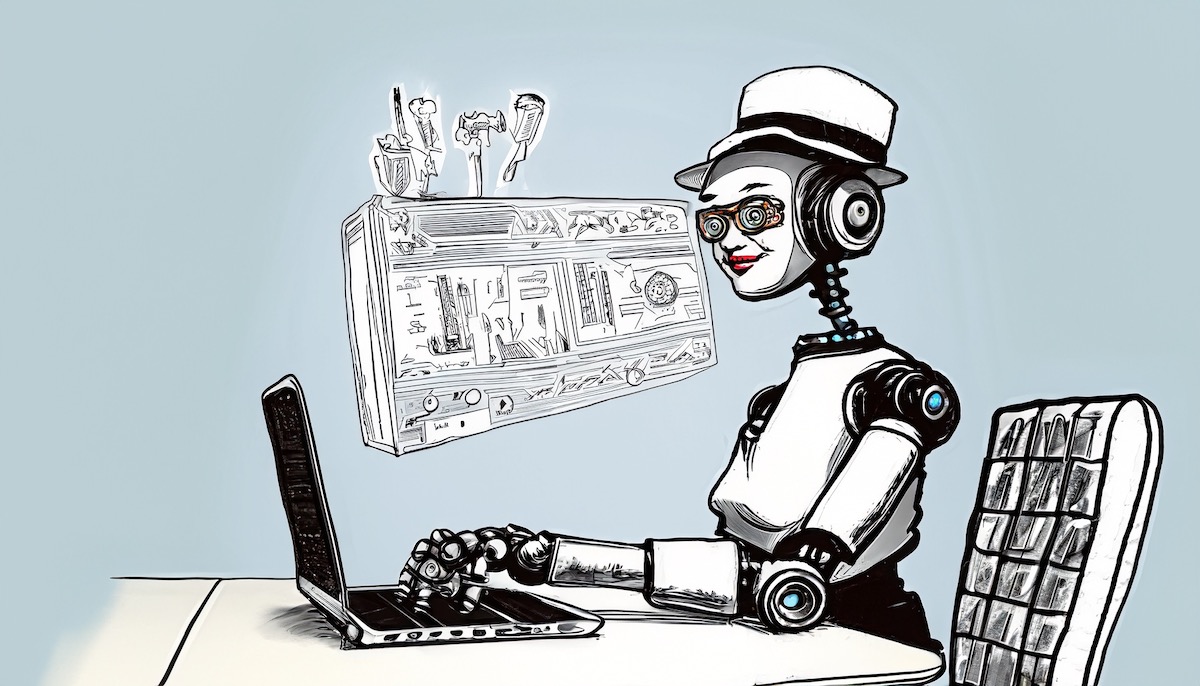
The answer is both—and understanding this duality is essential for the future of journalism. AI presents genuine transformative opportunities alongside legitimate threats that require urgent attention, regulatory frameworks, and strategic implementation.
The Opportunity: Real-World Impact
AI has already demonstrated significant value in newsrooms worldwide. The Associated Press generates nearly 15 times more reports than previously possible by automating corporate earnings summaries and sports updates. Bloomberg’s system, called Cyborg, analyzes earnings releases within seconds of publication and produces initial news stories, with approximately one-third of all Bloomberg articles receiving some degree of AI assistance. These applications free journalists from routine data transcription and formatting, allowing them to focus on investigative reporting that requires human judgment and contextual understanding.
The efficiency gains extend beyond speed. AI tools excel at analyzing vast datasets rapidly, identifying trends and patterns that would take human analysts considerable time to uncover. This capability proves particularly valuable for investigative journalism, where initial data analysis forms the foundation for deeper human investigation. Additionally, AI enables global reach through automated translation—Le Monde now publishes approximately 30 stories daily in English using AI-assisted translation, significantly expanding its audience.
Current adoption rates reflect this confidence in potential benefits. Approximately 96% of media organizations have adopted some form of automation, with 73% of publishers leveraging AI specifically for newsgathering functions. When implemented strategically, AI serves as a force multiplier: it handles preliminary analysis, generates summaries and headlines, fact-checks data, personalizes content to individual readers’ preferences, and operates 24/7 without location constraints.
The Threat: Structural Challenges
However, the anxieties among working journalists are well-founded. A global survey of 2,000 journalists found that 57.2% fear AI will displace more jobs in coming years, with 70% actively worried about displacement within the next few years. While currently only 2% have directly lost positions to AI, suspicions suggest algorithmic systems may have played unacknowledged roles in recent layoffs.
The job displacement concern extends beyond mere statistics. The threat concentrates on routine journalism—basic news reports, sports summaries, earnings announcements. Goldman Sachs estimates that AI could potentially perform approximately one-quarter of work currently done by humans. In resource-starved newsrooms facing economic pressure, this technological capability creates powerful incentives to reduce human staff rather than redeploy them to higher-value work.
Beyond employment, significant quality and ethical challenges emerge. AI systems generate “hallucinations”—entirely fabricated information that appears plausible—creating misinformation risks that erode public trust. Algorithms trained on biased datasets systematically amplify those biases, producing disproportionate representations in crime reporting, reinforcing stereotypes, and marginalizing underrepresented groups. An alarming 80% of journalists expressed concern that AI-generated news could be biased or discriminatory, with many noting they have witnessed this happening already.
The transparency problem compounds these issues. Many readers remain unaware that news articles were generated or substantially edited by AI systems. This lack of disclosure raises fundamental accountability questions: who is responsible when AI-generated content contains errors or misleading information? Media companies face pressure from large technology platforms that have developed AI infrastructure for newsrooms—creating dependencies that threaten editorial independence and subordinate journalistic values to commercial tech logics.
Regulatory and Rights Issues
A critical emerging challenge involves copyright and intellectual property. AI models were trained on millions of journalistic articles without consent from or compensation to the creators. The European Union has introduced ancillary copyright protections through Article 15 of the Digital Services Market Directive, but most jurisdictions lack comparable frameworks. Switzerland’s recent “Zurich Declaration” explicitly calls for the right to consent and remuneration whenever AI systems use journalistic content, along with mandatory labeling of AI-generated content and transparency requirements for training data. The U.S. remains fragmented on this issue, with courts ruling that copyright registration requires human authorship, but lacking broader regulatory consensus.
The Realistic Path Forward
The most credible evidence suggests that journalism’s future lies not in complete AI replacement but in strategic human-AI collaboration. Current best practices reveal a hybrid model where AI generates preliminary reports and analyses, which human editors then verify, fact-check, contextualize, and refine. This approach preserves journalistic integrity while capturing efficiency gains.
Public comfort levels reveal another constraint on AI-only models. Only 36% of news consumers accept AI-assisted human-produced news, and merely 19% are comfortable with fully AI-generated news even under human supervision. This public skepticism creates business incentives for maintaining human bylines and editorial judgment, particularly for complex, investigative, or opinion-oriented content.
Industry perspectives reflect cautious optimism about adaptation. While concerns run deep, journalists and observers argue that 97% of creative journalists cannot realistically be replaced by machines, especially investigative journalists specializing in information verification. Instead, the journalist of the future emerges as someone skilled in integrating AI tools, maintaining editorial independence, and applying ethical judgment—capabilities that machines currently cannot replicate.
Conclusion
AI in journalism represents neither pure opportunity nor pure threat, but rather a technology whose impact depends entirely on implementation choices. Organizations that treat AI as a cost-cutting mechanism to eliminate journalists risk degrading content quality, losing public trust, and facing regulatory backlash. Conversely, newsrooms that use AI to augment human capabilities—handling data analysis, routine reporting, and content formatting—can unlock genuine efficiency that enables higher-impact investigative work.
The decisive factors will be regulatory frameworks mandating transparency and copyright protection, industry standards establishing ethical guidelines for AI use, and organizational cultures that view automation as journalist augmentation rather than replacement. The threat is not inevitable; it is a choice. The op